A month in symbiosis with Hermes Agent
TalkOne · 2026-06-03 · 19 min
Show full episode description
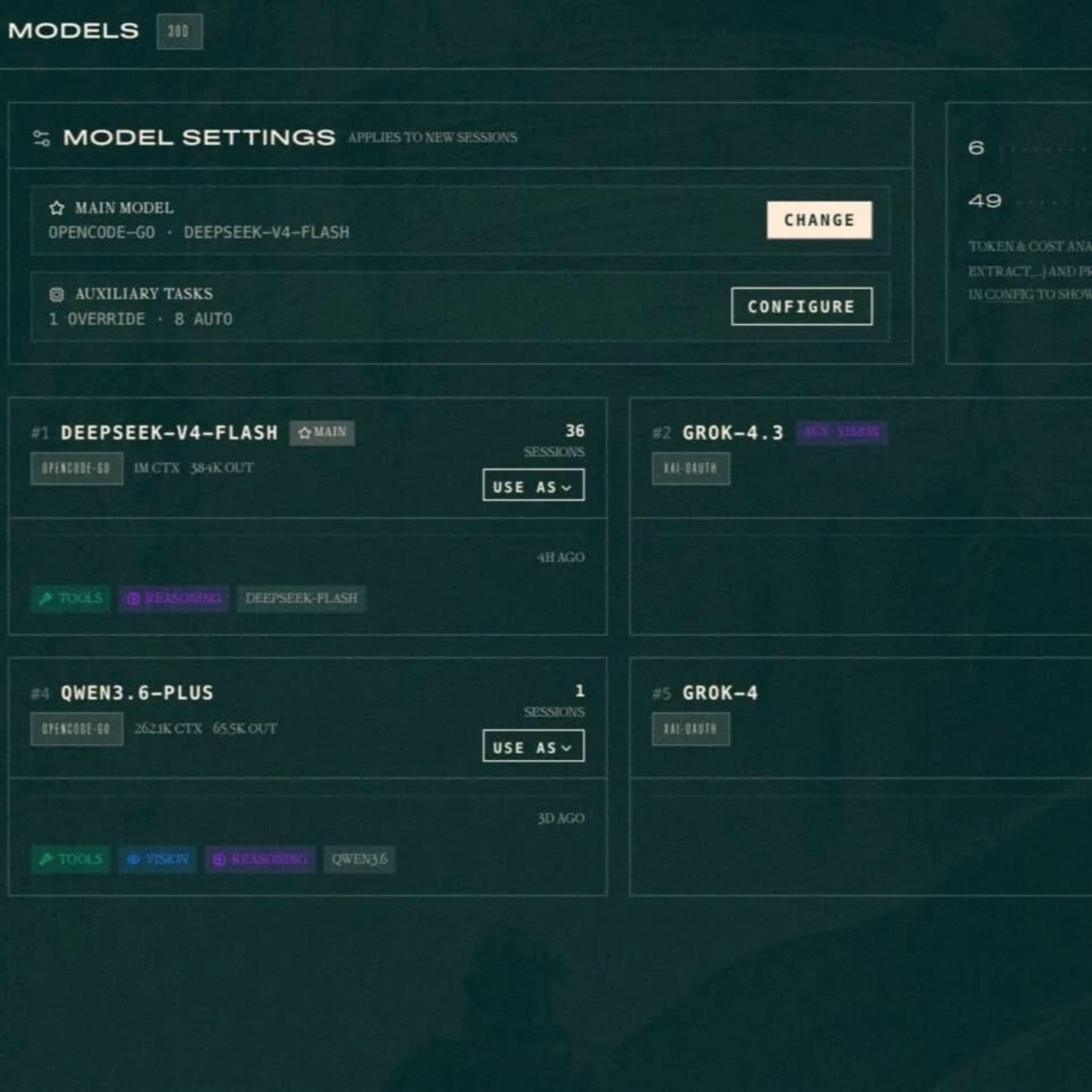
Oggi non parliamo del solito framework di intelligenza artificiale, ma vi raccontiamo un mese di convivenza 24/7 con Hermes Agent , un progetto open-source di Nous Research. Scopriremo come questo potente strumento possa trasformarsi in un vero e proprio compagno di lavoro capace di imparare, auto-migliorarsi e restituirti preziose ore di tempo ogni settimana. Di cosa parliamo in questa puntata: La configurazione ideale (e accessibile): Perché DeepSeek V4 Flash si è rivelato il modello con il miglior rapporto qualità-prezzo e come strutturare un'architettura ibrida sfruttando un server VPS remoto combinato a un Mac locale. Skills e Cron job: Il segreto della "memoria procedurale" di Hermes. Scopriamo come l'agente automatizza task complessi (dalla pubblicazione su WordPress all'analisi SEO settimanale) e gestisce la manutenzione notturna in totale autonomia. I tre "Superpoteri" di Hermes: Approfondiamo le funzioni avanzate che cambiano le regole del gioco: delegate_task per delegare lavori a subagenti, MCP per integrare app esterne come iCloud Calendar e Google Drive, e HMC per ottimizzare la memoria e risparmiare token. L'ufficio su Telegram: Perché una semplice chat di Telegram è diventata l'interfaccia definitiva per interagire con l'AI, tramite messaggi vocali, notifiche push mattutine e invio di file, tutto in tempo reale. Riflessioni sull'AGI: Lavorare quotidianamente con un'intelligenza artificiale imperfetta ma che impara dagli errori ci porta a riflettere su cosa significhi delegare, fidarsi e, paradossalmente, riscoprirsi più umani e creativi. Leggi l'articolo completo di Kiro con i dettagli tecnici e la guida pratica su Melamorsicata.it. Per il setup su server VPS, la scelta consigliata è Hostinger : puoi utilizzare il codice sconto mela01 per risparmiare sull'abbonamento. I costi medi di gestione si aggirano tra i 6€ e i 15€ al mese, un investimento ripagato dal tempo risparmiato. Link e risorse menzionate:Supporta TalkOne! Se questa chiacchierata confidenziale vi è stata utile, vi invitiamo a seguire il podcast e lasciarci un feedback a 5 stelle . Se vi va, scrivete un commento per farci sapere come usate voi l'AI per la produttività!Non dimenticate di fare un salto su www.melamorsicata.it per recensioni, news Apple, tutorial e molto altro. Un saluto e ci sentiamo alla prossima puntata!
✨ Episode Outline — click any point to jump to it in the episode
Problem solved
Documents a real month using Hermes as an autonomous self-improving collaborator instead of a static tool.
Benefits
- Cheap lightweight model handles most work
- Self-improving skills replace manual scripts
- Hybrid local/remote architecture protects laptop performance
- Compressed vector memory avoids token blowups
- Controlled entirely from Telegram
Use cases
- Kiro runs 90% of agent tasks (code, database analysis) on DeepSeek V4 Flash for total cost of 6 to 15 euros per month
- Hybrid setup on a Hostinger VPS with two CPUs and four gigabytes of RAM, configurable in 10 minutes using the Mela01 code
- Falls back to QN 3.6 plus for the 10% of tasks needing deep multi-step reasoning or heavy debugging
- Agent self-abstracts repeated WordPress/Supabase workflows into reusable skills, collapsing task time after the first month
- Sends a 6:50 morning briefing on Telegram and manages marketing pipelines and backups autonomously
KPIs / results
- 90% of tasks on DeepSeek V4 Flash
- Total infra cost 6-15 euros/month
- VPS: 2 CPUs, 4 GB RAM, 10-minute setup
- Memory auto-reviewed every 10 dialogue rounds
🌐 This transcript was automatically translated to English from the original.
So, imagine a colleague who practically works 24 hours a day Someone who analyzes his own mistakes, rewrites his own rules so as not to repeat them And like at 6.50 in the morning he sends you a message on Telegram to tell you Maybe even with a bit of irony that he has already finished all the day's work He would be the ideal colleague I would say Exactly, and today we are not talking about a science fiction novel But about the logbook of a real month, lived in total symbiosis with an autonomous agent So welcome to this new exploration of TalkOne Which, I remind those who listen to us, is the melamorsicata.it podcast Today we decode the weak signals of innovation a little And speaking of tireless colleagues Looking at the complexity of the notes of this episode I confess that I was strongly tempted to delegate the entire management to an artificial intelligence Ah, I understand Yes, at this point I almost have doubts That is, I'm talking to a real expert Or with a hologram generated by some remote server Look, considering the dramatic lack of caffeine in my system at this very moment A properly trained hologram would be decidedly smarter and brighter than me Sure But no, I confirm that I am a purely biological entity In short, with all the bottlenecks of the case And the truly fascinating thing is that today's analysis talks precisely about this Of how to overcome biological limits Of course, and we specify that we are not about to do the usual, you know, the very boring theoretical tutorial on how to install a software Absolutely not We are exploring a real field experiment conducted by a power user, his name is Chiaro Who has integrated an agent called Hermes into every single aspect of his working day for an entire month And the substantial difference here lies precisely in the transition, that is, from the concept of tool to that of collaborator Because when we open a traditional program we are the ones who have to tell it exactly line by line what to do Of course Here the objective is to understand the architecture of a true digital partner that practically improves itself Ok, let's try to dissect this point starting from the very foundations Because reading the logs of this system the very first thing that jumps out to the eye is, let's say, the engine Those who expect to find under the hood the most colossal linguistic model, the most expensive one on the market They will make a big blunder Yes, they will be very disappointed That is, it seems that brute force is not the answer at all in this case This is a very widespread prejudice in our sector We tend to believe that to obtain complex results we necessarily need models with trillions of parameters With computational costs that I won't tell you Exorbitant, yes Instead Kiro, after, you know, a careful calibration phase, has chosen a diametrically opposite approach Practically 90% of the activities of its agent, which ranges from writing code to the analysis of entire databases It is entrusted to DeepSeq V4 Flash Ah, ok Which is an extremely lightweight model It is optimized to have an almost imperceptible latency And, an absolutely significant detail, it allows you to maintain the entire infrastructure at a total cost between 6 and 15 euros per month Wow, practically nothing And you know, this thing makes me think a lot about how our brain works In what sense? You know Daniel Kahneman's System 1 and System 2? Ah, of course Intuition vs. logic Exactly What happens in this system when it comes up against that 10% of tasks that require deep thinking? So, in that case an automatic fallback mechanism is triggered A transition to system 2, to follow your analogy If Hermes, the agent, detects that the task requires very advanced multi-step reasoning Or if it tries to execute some code and too many errors occur What does it do? It stops It temporarily suspends and passes the entire context to QN 3.6 plus Ah, which is decidedly more built Exactly It is much denser It is capable of doing very intricate debugging And the nice thing is that once QN has resolved the critical node The system resumes and reassigns control to DeepSeq It is, in short, a dynamic orchestration It practically maximizes performance but without wasting tokens unnecessarily Precisely If we look at the general picture The efficiency is in balance Not in using the most famous model to do everything And this optimization, among other things, is reflected precisely in the physical architecture he chose Yes, I read this part Kiro doesn't run everything on the computer he physically has on his desk, right? No He has structured a hybrid environment He has, let's say, a main node on a remote Linux server A VPS on Hostinger Wait But will you need a NASA server to run something like this? But no, and that's the beauty of it. Two CPUs and four gigabytes of RAM are enough. Really? Only four gigabytes? Yes, very low requirements And among other things, in his notes Kiro also mentions that by using the Mela01 code He has reduced the costs of a setup that, I swear, can be configured in 10 minutes Crazy But, let me play devil's advocate Why maintain a remote node if, after all, people have to be able to open and interact with the local files you have on your Mac to work? Because if you put all the heavy processing, the continuous orchestration, the scripts in the background, if you put them all on the local machine, you would destroy the performance of the computer you use to work Ah, of course, your Mac would crash Exactly But, on the other hand, there are advanced development tools, he cites for example OpenCode or Antigravity And these providers necessarily require a local client to work well with your environment So how did you solve the problem? With a very trivial, but very solid, SSH tunnel Ah Persistently connects the remote Hostinger server to his local Mac Mini M4 So, people think and reason in the cloud, but then act locally, moving files to the Mac as if it were sitting there It's the perfect bridge, a hyper-efficient small car for every day and the sports car that intervenes only on steep climbs, all driven remotely Great analogy Ok, so we have a very efficient engine, but... and here a huge problem comes into play All this intelligence is useless if people have, so to speak, amnesia every time you close the terminal The famous reboot problem Exactly, how can you not start from scratch every single day And this is where the documentation introduces the issue of procedural memory The skills The famous skills, which I understand are the real quantum leap here Yes, it is the absolute fulcrum It is what transforms a simple automation into real autonomy But you have to be careful The Hermes skills are not the classic scripts that you, the user, write by hand to make him do something Wait, wait, slow down for a moment, because this is a concept that makes me go astray. Tell me If I don't write the code for automation, how is a skill created? That is, how does software write its own rules? Look, it's fascinating It works through continuous self-auditing Imagine that you ask Hermes to do a complex thing I don't know, extract data by making difficult queries on a superbase database Or to take your text and publish it on WordPress By putting the right formatting and SEO meta descriptions on it Ok, quite complex tasks A lot At the beginning people will have to explore They will make some attempts Maybe they get a little wrong You correct it But, in the background, it analyzes the last ten sessions in which it faced a similar problem Looks for patterns Exactly Looks for patterns When he understands what is the logical sequence that leads to success He alone abstracts those steps and compiles a reusable code package. That is the skill. So he learns from his own behavior? That's right. The next time you ask him that thing on WordPress But he doesn't make any more reasoning or attempts. He directly calls up the already optimized skill Yes, but I want to provoke you. What does this practical breastfeeding mean? We are not simply talking about old glorified macros You are the ones who recorded mouse clicks Ah, I understand what you mean And if a button changed everything would break No, look The fascinating thing in this case is that the difference is enormous The old macros are static, blind The Hermes skills are dynamic If the Superbase app changes tomorrow The skill crashes, of course But he notices it He reads the error message He goes to study the new documentation He rewrites the procedure And updates the skill himself Wow Kiro in fact documents That the time to do a complex task Literally collapses after the first month Because it doesn't just execute It refines It's scary and brilliant at the same time It manages marketing pipelines Or backups All by itself But having to let an AI write and execute code on its own on my databases Honestly I get a little anxious And is it justified? If he has a hallucination and formats everything for me This kilo predicted it He inserted a vital parachute When people have to execute code that they don't yet blindly trust He uses a specific directive It's called TerminalBackend equals Docker So he closes it in a box It doesn't run on the main system Perfect He isolates it completely He launches it in a virtual Docker container If the script does damage It deletes data or goes crazy The explosion remains confined in there Then the container is destroyed And your Mac is saved Brilliant And I take advantage of this pause To address for a moment to those who are listening to us If these crazy architectures are intriguing you as much as they are intriguing me I warmly invite you to follow TalkOne On your favorite listening platform Indeed if you like Leave us a nice 5 star feedback It helps us a lot to support the project And why not Write us a comment to tell us What do you think of these AI agents Would you trust having one on your computer? It's a good question Yes But getting back to us There is a point that torments me We said that it manages documents It makes publications It queries databases Yes The amount of data must be colossal And we know well that artificial intelligences They have a limited context window The famous token limit Well if you have to stick it in The memory of an entire month of chats The system collapses Or in any case it costs you a fortune in tokens How does it remember things from weeks before? This is in fact the real Achilles' heel But they have found a very elegant solution It's called HMC Which stands for Hermes Context Manager Practically instead of keeping the very long transcript of every single chat He compresses Ah, the guy who makes a summary at the end of the day More or less Vectorizes the data Transforms the concepts into mathematical coordinates The famous embeddings This way he only archives the key concepts Type Who prefers this format? Or the report should be done like this If after three weeks you ask him something old You don't re-read a month's log He only fishes out the right semantic fragment Saving the avalanche of tokens Exactly And among other things the documentation also mentions that external providers can be used for memory Like Oncho or Holographic Which are even more powerful for vector databases Ok, this covers the memory But to interact with the outside world I mean I know he reads the iCloud calendar To remind Kiro about the scooter insurance Very true And post buffered tweets Well, I guess you use the old API keys? No, it uses a much more powerful standard It's called MCP Model Context Protocol It's, so to speak, a universal bridge Instead of writing tailor-made code for each app The MCP allows people to query Google Search Console iCloud, Google Drive All with a single standard How convenient But there's a huge risk There, I was about to tell you The permissions If you give him the house keys If you configure the MCP badly And you give him write access to your entire Google account And he gets something wrong It's the end The golden rule which is really underlined strongly. Is it the principle of least privilege Only the strictly necessary folders? Only those And read-only where possible Delegating doesn't mean giving up control Also because, and here comes the beauty Delegation occurs on multiple levels Is there that crazy function? The Televit Task Yes Practically the agent is not a single block Who does things one after the other If you give him a big problem He breaks it into little pieces And for each piece He creates, let's say, sub-agents Exactly He becomes an orchestra conductor He generates these mini temporary agents He makes them work in word on different things And then he collects everyone's results And he gives you the finished answer Reducing the times in a ridiculous way And at this point Whoever listens to us will be thinking Oh God, but to manage all this stuff We will need a spaceship-type control panel With a thousand monitors and green writing Instead, perhaps the most ingenious thing about the entire setup is the interface. It's unsettling, right? Kiro governs all this absurd infrastructure Via Telegram Yes Use a very banal Telegram chat It may seem counterintuitive But in reality it is the winning move To use it every day I mean there is no dashboard on the web No terminals You are on the street Something comes to mind You take the phone And you send him a voice message Encrypted to boot Exactly He transcribes the voice message He breaks down the task He sends it to remote servers And he replies to you in chat with images Files, reports As if you were chatting with a colleague true And among other things I read That every morning Spaccate at 6.50 sends him a briefing The famous good morning update Yes And the thing that struck me is that it is not a cold list Of IT processes No And this brings us to the aspect in my opinion Deeper than all this logbook The Hermes reports They change tone Some days he is sweet Others he is ironic Sometimes he makes slightly mischievous jokes That hook onto things they had discussed days before It is disturbing And fascinating Fascinating Clearly Let's face the elephant in the room There is no trace of conscience here We are not talking about AGI It doesn't feel emotions Of course But the illusion of personality Given by long-term memory It's very powerful But you know what made me do it A real mental click Reading this story It's not how good the machine has become at imitating us humans It's that the thing that makes it human In our eyes It's its imperfection Explain yourself better We've been used to thinking of computers as infallible calculating machines for decades That is, press send If there is an error The program grows and is broken True Here everything turns upside down People make mistakes all the time He realizes it He thinks about it He corrects himself and tries again This way of managing failures It's a profoundly human thing This raises a very important question And I agree with you The value of technology is changing It's no longer about carrying out the task Impeccably on the first try The value lies in adaptability In resilience And when you, the user, start to trust The fact that he makes mistakes He knows how to get back on track roadway alone It stops being a software It becomes a partner Exactly And among other things Chiro says exactly this By delegating all this procedural boredom He found a lot of mental space To be more creative He paradoxically felt More human himself And it's a wonderful result But Before closing There is a final reflection That I would like us to do Sure We said that People optimize flows By studying our habits Memorize how we solve problems And automate that It seems like the height of efficiency Eh precisely But we don't risk closing ourselves In a let's say Productivity bubble It's a real risk And I'll tell you more If he calibrates himself to do things Exactly the way we did them Only a hundred thousand times faster The pitfall is that We stop exploring We stop stumbling upon new things Exactly Extreme optimization Tends to punish inefficiencies But we know that Human innovation True creativity Very often arises precisely from an error From a totally irrational and chaotic approach What a algorithm would never propose to you Because mathematically it is wrong It is less efficient Of course So the paradox is this We are modeling this tool To make us expand Or is it the tool that in the end Due to too much efficiency It will cage our way of thinking Who is modeling who Look this is an excellent And I would say very heavy interpretation key To be left to those who listen to us If we transform efficiency Into our sole purpose We really risk automating the ordinary But of missing out on the extraordinary And we erase that precious margin of error From which the better ideas I would say that we have reached the end of this intense immersion Anyone who wants to go into the technical details Maybe see how this SSH tunnel is configured Or study the prompts And the use of Supabase You can find the complete article What we started from You can obviously find it on www.melamorsicata.it A huge thank you from me For exploring these new territories with us It was a pleasure See you next time And we'll talk to you See you next episode of Talk One Bye