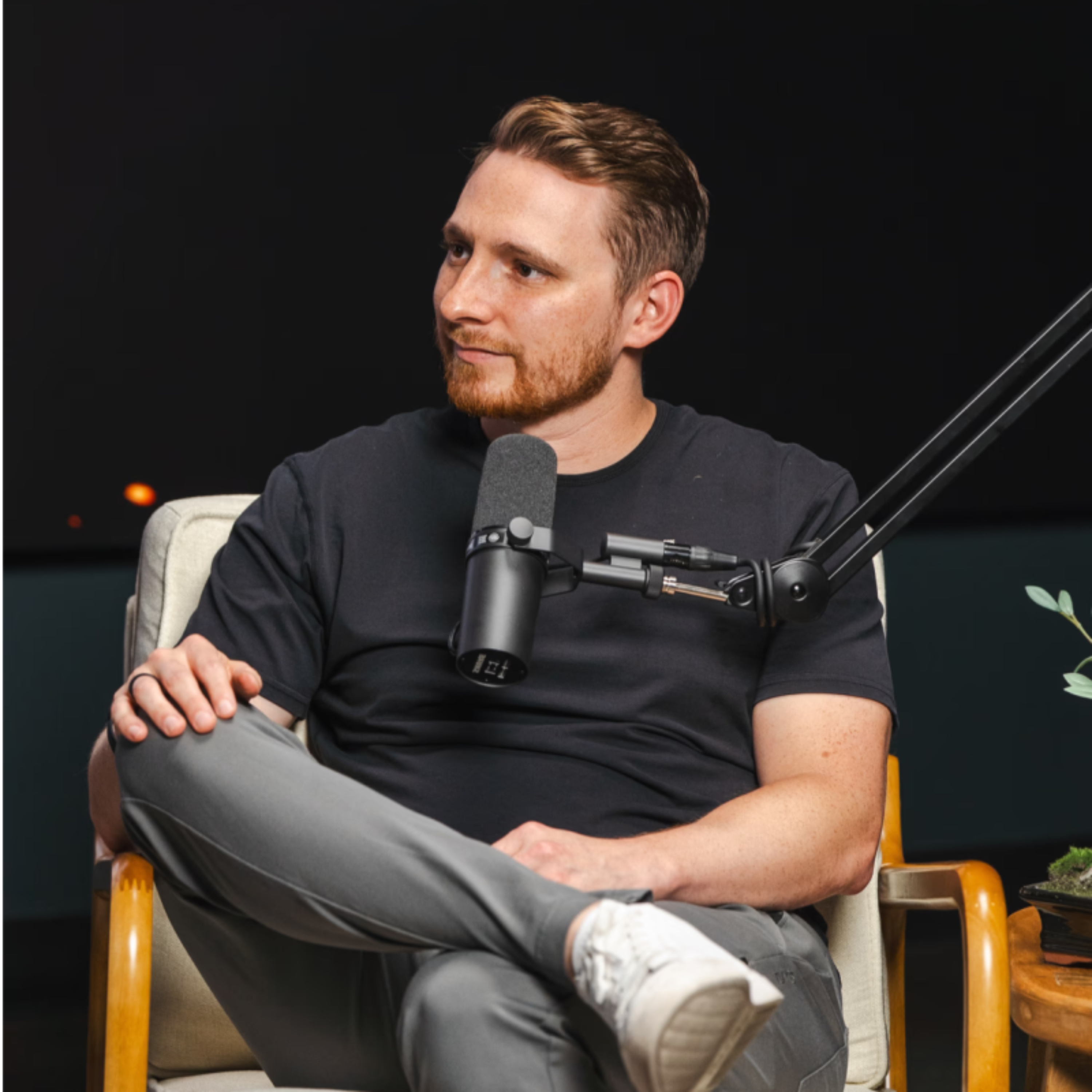
Agents That Run Outbound While You Sleep | Mica, Founder & CEO of Ample Market
The LeanScale Podcast with Anthony Enrico · 2026-07-13 · 51 min
Show full episode description
Your AI is sitting idle until you prompt it. Mica's is monitoring Product Hunt at 3:50 AM, parsing podcast guest lists overnight, and routing qualified leads to the right rep before his SDR team even logs in. Mica is the founder and CEO of Amplemarket, the consolidated go-to-market platform now used by thousands of sales and GTM teams globally. Built in San Francisco, Ample Market combines a signals layer, a contact and business data engine, and a multi-channel engagement stack — email, LinkedIn, and calls — into a single platform. With its new MCP and agent layer, it's quietly become one of the cleanest demonstrations of agentic sales in market today. In this conversation with LeanScale co-founder Anthony Enrico, Mica walks through live demos of agents doing actual GTM work: pulling conference sponsors from a logo grid, parsing Twitter followers from a screenshot, building enriched outbound lists from a Claude prompt, and triggering bulk SDR connection requests from a Telegram message. Then the bigger conversation — why outbound is alive and well when done with context, why the productivity gap inside GTM teams is about to widen dramatically, and why the smartest sales leaders are spending their AI gains on velocity, not headcount cuts. WHAT YOU'LL LEARN The "Lego pieces" framework for designing your own agentic GTM stackWhy scheduled tasks put you in the top 0.1% of AI users in sales todayHow to chain Claude with an MCP to go from screenshot to sequenced outbound in one promptThe two-agent pattern: research agents handing work to engagement agentsHow a 3:50 AM Product Hunt agent quietly routes qualified launches to the right repThe Telegram message that triggers connection requests across an entire SDR teamWhy outbound isn't dead — and the 40/40/20 channel mix proving itThe "what would you give a smart intern?" heuristic for designing agentsHow LeanScale uses AI internally without firing anyoneWhy market pressure (not AI itself) keeps reps employed as productivity scales CHAPTERS 00:00 — Cold open02:00 — What makes Amplemarket the GTM AI stack04:00 — The Lego pieces framework for agentic GTM08:00 — Skills + scheduled tasks: the AI adoption tier ladder09:30 — Demo — Pulling podcast attendees in one prompt12:30 — Demo — Mapping VP Sales at conference sponsors15:30 — Demo — Parsing a screenshot into a sequenced list20:30 — The two-agent pattern: research + engagement25:00 — Truly per-prospect personalization (not first-name swaps)28:00 — The Telegram + Hermes follow-up workflow31:00 — The top 0.1% — scheduled tasks that run while you sleep33:30 — The 3:50 AM Product Hunt agent40:00 — One Telegram message, bulk SDR connection requests42:30 — Is outbound dead? The 40/40/20 channel data47:00 — What the next 12 months actually look like for GTM52:00 — The ceiling has been ripped off53:30 — Wrap ABOUT THE GUEST Mica is the founder and CEO of Amplemarket, a consolidated go-to-market platform that combines a signals layer, contact and business data, and multi-channel engagement — email, LinkedIn, and calls — into a single stack now powered by an MCP and agent layer. Used by thousands of sales and GTM teams globally, Ample Market sits inside its customers' CRMs, owns their channels of communication, and increasingly runs the work itself. Mica builds out of San Francisco and is one of the clearest voices on what agentic GTM actually looks like in production today. ABOUT THE LEANSCALE PODCAST The LeanScale Podcast is the show for GTM operators building the next generation of revenue infrastructure. Hosted by Anthony Enrico, co-founder of LeanScale. ▶ Learn more: https://www.leanscale.team▶ Follow Anthony on LinkedIn▶ Follow Mica on LinkedIn #RevOps #GTM #AI #AIAgents #Outbound #B2BSaaS #SalesAutomation #Amplemarket #MCP #FutureOfSales #LeanScale
✨ Episode Outline — click any point to jump to it in the episode
Problem solved
Sales and GTM teams underuse AI, missing agentic workflows that automate outbound, enrichment, and multi-channel engagement.
Benefits
- One-prompt list building with enriched contact data
- Recurring agents that run outbound while you sleep
- Multi-channel engagement across email, LinkedIn, calls
- One-click skill installs for precise LLM output
- CRM-aware routing to the right account owner
Use cases
- Found last 10 LeanScale podcast attendees, enriched emails/LinkedIn, built AmpleMarket list
- Generated icebreakers, fun facts, and LinkedIn connection messages per speaker
- Mapped HumanX Europe conference sponsors, enriched VP Sales/CRO contacts for top 20 sponsors
- Set recurring Friday agents to map new attendees weekly
KPIs / results
- 37 GTM/sales skills available in AmpleMarket skills library
- Top 20 conference sponsors enriched in one flow
Tools / build
- AmpleMarket MCP
- AmpleMarket skills library
- Claude with connectors
- AmpleMarket agents
Today I have a dear friend, Mica. He's the founder and CEO of Ample Market. I think one of the best sales and marketing platforms you could leverage if you're growing a business, you're trying to get in front of your ICP. I don't think there's anything better than Ample Market to use. We use it internally at LeanScale and we recommend it to a lot of our customers. And today, Mica prepared a special demo where he's going to be walking through how to leverage Claude with Ample Market and what you can do with their new product. Mica, super stoked. I can't wait to go through this. Ample Market already is such an amazing platform for sequencing, data enrichment, finding your ICP, getting in front of people on multi-channel, LinkedIn, email. So I'm a huge power user of Ample Market already, but I can't wait to see what you put together and how we can do even more with AI. Mica, super excited. Mica, super excited. Mica, super excited. Mica, super excited. mentally different than the way that they're actually working today. And if you look back 12 months ago, the way that sales teams work was not so, so different than the way that they are working today. So I think there's like we're making the deltas, the changes like have not been that meaningful yet when it comes to sales. Again, everybody's using a cloth or a chat GPT, right? But they were already kind of like doing it. I think skills were a thing that came out to be surprised by the amount of people actually not using or not knowing what a skill is. And I think there's a lot still of like AI penetration, especially in the GTM org that needs to happen. And again, I bet you find this too, but there's a big variability in terms of like the AI savviness of a bunch of these organizations. Even for like some AI first companies, there's still like a lot of variability there. So yeah, I'll shift my screen and I'm excited to kind of like... My idea would be to kind of just inspire people. And it's not at all Ample Market related, like whatever like tool stack you're using, like just want to inspire people to kind of like think a bit more about what can you accomplish if you have the building blocks that look like this? You have like a really smart intern. You have like web search. So like an intern that actually is capable of like searching the web for things. And then like, I'm assuming that you have like a data platform and I'm assuming that you have like a workflows agent, right? Some way of actually taking actions or suggesting actions on behalf of you. And then like, we can go crazy, right? So to me, these are like Lego pieces, right? Different colors and we can just build anything, which is sometimes tricky. Like when you go to the Lego store, you have like these sets of Lego pieces that are already like, you know, you want the Batman Lego piece, right? But I could say, I could tell you like, here's a hundred yellow Lego pieces and a hundred black yellow Lego pieces, but you wouldn't know what to do. And I think sometimes, like, especially when AI and GTM, you get a bit into that motion where it's kind of like, okay, this is really powerful. Like, where do I start? Like, what should I do? And I think inherently, like you should, everybody should be spending time thinking about it. Like, I think all companies should be just like, and I was doing this with companies like, but like just whiteboarding things, like what are the places, what are the things that are happening? Like on a recurring basis, what are the things that my team is actually doing that I can actually provide them like with a very smart agentic assistant and where they would actually bring my reps information. Right. And again, just, I'm, I'm, I'm assuming from now on that, like, we know what Claude is or ChatGPT. Uh, and I'm assuming too, that like, you know, like you have connectors enabled. So meaning like your ChatGPT or your Claude are capable of like doing, um, um, they're capable of controlling your computer or going into your Slack and going into your like ample market or like into your data platform, into engagement platform and, and doing things on behalf of you. But, uh, let me share my screen. And again, like if none of this makes sense, or if, uh, if you have questions, just. No, no. No, I, I think that's perfect. And I think the audience is probably AI fluent, um, at least definitely exposed. So I think going through it with that assumption is going to be really good. And, and I think one thing just to tee up that I think would be good before going into some of these, just a quick overview of ample market. I know these use cases could be used with other tools, but I do think ample market unlocks quite a bit. And I think it'd be good to kind of ground how you're connecting with some of these use cases too. Matt. And, um, thank you. I'll, I'll give you, I'll give you the, the, the quick overview. So like ample market, like, I think you described quite well before, but it's kind of like a consolidated platform when it comes to anything that you typically need in your sales tech. So it's a signals platform. It's a data platform, like a business data. So like you have contact and business data, but it's also like a multi-channel engagement platform. So we're plugged into your email. We're plugged into your LinkedIn. We're plugged into your calls and we can actually, um, help you create sequences or steps that actually, um, take, uh, actions on behalf of your suggestions to you. But the most, the most interesting thing about ample market is kind of like if you have like really good data infrastructure and really good, um, workflows or sequencing infrastructure. And if you put like a layer of AI on top of all of this, then you truly like, it's so easy to start agentic flows. Right? So ample market being like directly, um, connected into your CRM. We have like maximum context about like what's happening in your CRM. We own all of your channels of communication and we have a really strong and powerful database for business data. And so like, then everything that you want to build as like a GTM or a salesperson becomes so much easier. And so ample market powers agents. Like, and I'll show you that in a second, but like you can actually set up like different agents that are doing things on behalf of you, or that are just information agents. They're bringing things, um, to you. So again, think about ample market if you want like a very simplistic way of thinking about it. It's kind of like a signal, a signals platform, a data platform and engagement platform merged together. And then like capable of like, uh, your, you can operate it the old school way or you can operate it the new way, which is like, you can actually set up agents that are taking actions on behalf of your, or bringing things your way. Does that help Anthony? That's perfect. That's perfect. Awesome. Before I go into these flows, I think one, one of the things that I really want people to, to, if you want to become like a top 1% user of AI in GTM, I think just like understanding what a skill is and leveraging skills can actually get you there. And I'm, again, I live in San Francisco. So like everybody in this town is AI pilled. And oftentimes I still find people that are not like fully leveraging skills, especially like in GTM, um, or in sales. So at Ample Market, we have like this space that is called AmpleMarket.com slash skills. I would urge you to just go there and take a look at them. Again, these are, it's a collection of 37 skills. Um, and a skill just to quickly define this is just, um, a subset of like more precise instructions that you're giving like your LLM. So like be it cloth or chat GPT. And you're then asking like the LLM to be more precise in the way that they follow, um, the instructions. So like you're maximizing the quality of your output. Um, so like usually skills are kind of like tough to install, but, uh, at AmpleMarket, especially for AmpleMarket customers, it's just like, you click the cloth, you click install, and it's going to be like a one click install. So now like all of a sudden like this STR composition skill is available to me. So just go, go, go into the skills page, take a look at them. Um, and then you feel free to adapt these skills to whatever tools that you're using. But I think. If you can take away one thing, it's kind of like go into search for a GTM or sales skills and, and try to understand what they are and how you can actually leverage them. Okay. Um, now let's go into a few, a few, um, specific workflows that I've seen, like companies kind of like, uh, leveraging, um, on a, on a more recurring basis, especially when it comes to leveraging an MCP and an MCP is just like a way to connect like your platforms into like your LLM, so be like your HTTP or your cloud, but you're basically, you're giving like that LLM the power or the context that exists in other apps. So AmpleMarket, we have like an MCP. And so basically you can call, um, you can ask AmpleMarket to do things via like your, um, your MCP, uh, within, for example, a cloud, um, conversation. And so here, for example, like, I was just looking at the very simple use case here, which is this one. Can you find the 10 last attendees of the Linscale podcast for each speaker? Give me an insight from that podcast that is related to AI transformation in sales and GTRM. Also provide an icebreaker, a fun fact, and short LinkedIn connection message mentioned in your podcast, create a list on AmpleMarket. And then again, I did this. And then like, as you can see, like AmpleMarket was actually called in one of these flows where it's actually, we're enriching the data. We're getting the data from like the, we're getting actually the podcast transcripts and the attendees from Apple. Like there's, there are names, but there are no emails or no LinkedIn profiles. So, you know, you're getting all of the data and then you're actually enriching all of the data from, uh, here with AmpleMarket. And then the cool thing is like the outcome is that you go to AmpleMarket when it's done and you get a list like this. So you get a list of like LeanScale podcast, like here's the first names, the last names and, uh, LinkedIn profiles, all of these data fully enriched and validated already for you. Again, as a, as a person, this took me no time. And now I have like two cool things here. It's just kind of like an intro. Your Linscale episode on pipeline versus revenue was sharp. The data, uh, point that, uh, too much, a low quality pipeline drag, uh, wind rates down is one of my teams. More teams need to hear. Like that's another one. Like you have like a little insight here, but again, this is like the type of things that are very easy to do once you have like a smart assistant web search, right? Because here I can actually leverage web search to go into like the Linscale, like list of podcasts and then AmpleMarket MCP because like all of these contexts, like AmpleMarket, you need to know that like, okay, this person that works at this company is this person that is like this one email. So we actually found the email. We found their LinkedIn profile and now we're providing you all of this information here. And again, as a rep, now you can decide what you want to, uh, do with this. So it's kind of like just a very simple list building use case, um, in here. Yeah. And, and this is really spot on. I mean, if you were to try to do this on your own, you would probably go to the podcast if you even knew it was there. Uh, cause I'm sure you could prompt to say, Hey, what would be some interesting ways to connect with these people? And then you can find that then you'd have to go figure out who they are, then go try to feed them into an enrichment model. But to be able to do it all in one prompt, that's pretty impressive. And, and the, again, this is very basic, right? So, uh, because like, I'll show you how this becomes a lot more interesting, which is kind of like, now you have the podcast, you're able to find the people you're able to infer who the people are and you're able to get their contact information. But then like what you want to do with this is potentially you want to take the next step, which is kind of like take an action or suggest one action. You might want to map these across like your own, uh, CRM, right? And so like some of these accounts might be owned by me. Some of them might be owned by my team and I might want to not send them to me, but to the right account owner. And by the way, I might want to take a look at lean scale attendees on a weekly basis. So instead of having to run this every time as a one-off thing, I want to run it like recurringly on a Friday afternoon, for example. Um, and I'll show, I'll show you that in a second. The, the, the other cool use case. And I think, um, again, the real leverage and we really like, uh, to do, which is kind of like we sponsor, we are, uh, at events, um, very often. And one thing that we like to do, uh, as a sales team, we like to, again, map the floor, map the sponsors, understand who the sponsors are. And typically for the conferences that we go to, the sales leadership team will be there. So there'll be someone from VP of revenue, CRO, VP of sales. So one thing that we actually, uh, love doing is this thing like, okay, I'm going to this conference that's happening in Europe that is called humanX, uh, 2016 Europe. And I like to get the contact information of the VPs of sales, sales direction, CROs for their top 20 sponsors, uh, find this and enrich them and add them to all this on Apple market. So like here, again, I know that there's like a, a, a page for the conference and I'm actually sharing that page with like my, my assistant. I'm telling my assistant, go there, fetch all of the, um, the sponsors, which typically will be a logo. So you get a logo of the sponsor. So you need to convert that logo into like a name of a company. And then like, you need to infer that that company is actually a specific, um, business, uh, URL. And then from there you actually need to go and find like VPs of sales, VPs of revenue, GTM, um, leaders, and then add them to a list. Again, you can do this manually or like within a prompt here, you can actually then go back to Apple market. And you can see that again, we have like their top, um, sponsors here and look, I have like director of sales, VP of sales, VP of enterprise, GTM sales director. And all of these are kind of like the companies that are the main sponsors. And these are the potential sales leaders that they're going to likely have at that conference. Very simple one. Uh, but again, one that would actually take a while, uh, to execute. And, um, and again, like this is just to give you like some kind of like a, the building blocks of like, okay, web search allows me to go anywhere on the web and get context of what's happening there. The agent allows me to then parse that information and feed that information into like this Apple market MCP. And then that actually allows me to convert that information into actionable insights or into actionable data that can actually, that I can then later on, um, put into a sequence or send to my reps or send to my CRM, um, you know, for all intents and purposes, if that makes sense. Yeah. And to be able to do all that in one flow is, is really, really difficult. Cause normally you would go like find the list. Then you would try to get the list into another platform and then enrich it and then take the enriched list and go put it into a sequencing platform. I mean, there's enough friction in there to where you probably won't even run some of these plays because it's like, ah, it's going to take too long for me to even get to that point. But to be able to do the whole thing from quad with the backend of ample market, giving you all the data that you need, that just really unlocks the ceiling of what your outbound efforts could be. I completely agree with you. And again, like we can next, then I'm taking this example here, which is kind of like, look, you have a list of like, uh, I'm just like, this is a janky one. Like I went here, took a screenshot of like a few Twitter followers for X followers for ample market. And then I can actually tell like Claude, can you please, um, um, find the people, uh, in this list that follow ample market, use ample market to find their LinkedIn and their email address, create a list for ample market. Next followers. But again, this is just to showcase another, a bit trickier principle is kind of like, even if you have like data, like an image, like this, like really smart agent can actually parse that information. Then there's going to be like non-perfect data here, right? So like you have non-perfect data you have. And it's really tricky to sometimes like parse like information from like a place like Twitter or like people might use different data points and what they have in their LinkedIn or in their email address. But like with, with, with ample market, you're kind of like going to parse this with Claude and then push that data into the ample market MCP. And there's like a lot of complexity here, like your first names and last names, and maybe there's like a company name. So there's a lot of like potential, like, uh, combinations of searches that you can, that you can do here. But this is another cool example of something that you can do today. And I'm just showing this one because it's a non-obvious one, a tricky one that most people actually, um, wouldn't do, but like, now you just let, uh, the ample market parse, like, so it's, right. It, it, it, it's actually doing, doing the search here. And then basically it's pushing this all into like the ample market MCP, which has access to like a search that it can ingest like, uh, names and company names, et cetera. And then eventually like I'll have a list that is created for me on, on, on, on, on ample market, sorry, with their LinkedIn profiles, et cetera. So let me share with you. Uh, but yeah, we'll just wait for it to, to pop in here, but I just wanted to show that with that one too, which is basically very interesting because like when we go to conferences, we have this other thing that, uh, allows us, we take pictures of badges and then like, I say like, Oh, connect with this person. And then ample market is, that's actually an automation, but like we infer like first name, last name, company name, we find the person and it connects automatically after the person swing by the booth, uh, for example, which is, um, yeah, uh, a pretty, uh, interesting, uh, use case to put, but as you can see here, like we're finding ample market is finding these results. It's actually finding everything it's enriching all of these people and then it's going to be adding them to the list. But yeah, that's, that's another cool one. Anthony, that I wanted to showcase here because it's a non-obvious one going from like a stale picture into like something that is like, uh, context and contact reach. I think you've really pulled together some of the more difficult parts, especially I love the, uh, events one where you're taking pictures that way you don't have to have a separate app or you're taking time scanning a QR code. It's a quick picture, way more comfortable experience, um, when you're interacting with people in person, but it's stitching together a lot of these really difficult things to get the right list and data set to. Now, this is where I think a lot of this tends to break down. How do you, you've enriched the data. You have the right list. You have the people you want to get in front of. You have the context. Now, how do we put that to action? What do we do next? Yeah. The very good question. So like these ones are kind of like the list building ones, because it's like, I see a lot of people using platforms to just do list building. And I'm telling, um, what I'm wanting to showcase here is like, once you have a really good data MCP connected to like your JGPD or your cloud, like, you know, list building because it's very easy and it's kind of like very basic, but this building can be very sophisticated. But to your point, I agree. Like, how'd you go from here now to an action? Um, and that's the other, uh, magical part of ample market. I'm actually going to just open up ample market, but I was telling that, uh, I was sharing that ample market is as the, the capability of actually ingesting a signal and then like suggesting actions or taking actions on behalf of users. So the way that you connect now, um, Claude to ample market, you can actually, I, I could say we can go there and say like, oh, now build a sequence and like write this email, et cetera, and then send to ample market. Right. That's one thing. Or we could just connect the Claude agent that is running the parsing and creating the list and say like, now send to this other agent. There is an agent that lives within ample market. And then the, these two agents are actually communicating. So like this one did the research enrichment. And then now it's actually sending to like another agent on ample market and that agent within ample market has specific instructions for how to act on the data that the other Claude agent sent to it. So like you have like, it's almost like you have two agents here communicating and every single one of these little things here, as you can see is a different agent. So for example, like I was, we talked about the lean scale one. So Chris here went into the lean scale podcast. And so like Chris was fed into this other ample market agent where you can see here that, you know, this agent is like, I don't want to sequence. I just want generic task for it. Tell me why this podcast and this person would be interesting for ample markets. And so like right now, Chris from the lean scale, went into the lean scale podcast. I actually received this on a daily basis for new alerts and information. Like it's actually giving me information for the accounts that are under my name. That's an example, but I have like other, it's like, I didn't show you this one, but like I have one that is actually monitoring product hunt, right? So like the way that you can actually monitor like a, a events page, you can actually have one that is monitoring product content. And so like here, for example, I have like, uh, I have an agent that is actually monitoring product hunt launches. And then here, um, Artem, like, uh, was, uh, his company was launching something. And again, same thing. I'm here kind of like getting information about like what the launch was, um, what, um, how many uploads there were, what were the most, uh, interesting, uh, uh, things in the comments. I have another one, for example, that is connected where like Claude is looking at a Slack channel for inbound leads that my SDRs are working. And then it's actually giving me, um, it's actually giving this agent here, which is called my inbound agent. So like, again, you have like a Claude agent that is running on Slack and then is actually going and sending that information to the Ample Market, my personal Ample Market inbound agent. And it's actually saying, Hey Nick, Mickey here for Ample Market. So you can check us out, like happy to help. Let me know if you want to chat one on one. So that's like Nick here at Trata was, uh, you know, uh, seen coming inbound is actually engaging with someone in my SDR team. And now I have like another agent that is actually suggesting that I take, um, this specific action. And now like I have this other agent, many, uh, many different, but this was actually one that is also monitoring Slack for the most important deals like that are, uh, coming in. And it's actually suggesting that I actually multi-thread with C-level leadership, uh, within those accounts. So for example, this was actually like, again, senior director coming in, CRO getting a connection request, uh, from me. So there's, there's a lot here, uh, but connecting, um, Claude to Ample Market in this case, because Ample Market is capable of like data and engagement and creating its own agents. These things become very simple and very easy, right? So, uh, all you need to do is to kind of like create a new agent and within that new agent, you just like give it instructions. And so now what you have is kind of like two agents working in tandem for you and either taking actions on behalf of you or suggesting actions that should, you should undertake. And for me, like every day I come here and I, all I do is kind of like, I say yes or no, um, to, uh, to these tasks. If that makes sense. I have more, but like, I wanted to pause here for a second to, to see if this, uh, overall makes sense. It makes a ton of sense. And I like that you really put the keys in the hands of the, the person who is doing the outreach and doing the outbound because you can say, Hey, yeah, run it fully autonomously. Like go, if you want to, there's checkpoints you can have where you keep the human in the loop to make sure, Hey, I want to triple check. These are super important outreaches. I want to make sure that these are going to the right people or tweak the messaging a little bit in sequence before shooting send. But I also want to highlight how personalized this is. This isn't saying, Hey, we're going to run a sequence that has seven steps and we're going to run everyone through it. And we're going to personalize it by changing their name or adding a little tidbit. No, no, no. Each person is getting their sequence started from scratch. Should they be hit up on LinkedIn first? Should we send an email first? Should we do a task for this first? Should we build an asset before we launch a sequence? I think some people listening might not have an appreciation for exactly how personalized this is and how signal relevant the sequence becomes based on what's actually happening. Very good point. I that's like, I thank you for bringing that up. I think it's like, I'm, I was, this is an agent. Like, so the agent can do like the instruction that you give it. You can act again. Think about this agent also being another smart agent that knows whether or not we are connected, that knows whether or not, like I emailed you in the past, that knows whether or not I cold called you in the past and you picked up the phone. So like whenever like the information comes from like the, the, the web and the cloud agent into Apple market, Apple market, since like we own like these channels of communication, the agent can then suggest something that is truly unique, right? So like, uh, it can say like, okay, like if I sent an email to this person, I want to start with an email. But if I've cold called them in the past, I kind of like wanted to start with a cold call because or with, or even a text message, right? So if, if, if I have their phone number, if I've engaged with them in the past, I can't do that. So like, like the content of every single step is truly bespoke and unique, but like even this, the, the, the where you're taking actions, um, is, is, is unique. And so this is like another one, like this is a cool one, like, but a quick example that I wanted to showcase here is actually like a referral from a friend. Like, Hey George, can you, the, only suggested I reaching out to you and the cursor growth team? Like you mentioned the growth engine, um, growth engineer building a curse. It's like, this is like, this is actually this context here. Plus the overlap with there's like a lot of context here. Um, that I, I just really quickly gave it to like my agents out. Some just remind me to connect with, uh, with George, because like Keith, he told me that to reach out and this was the topic. And so like, I told that to, I told that actually I told that to a telegram, uh, to my Hermes agent that then like sent that to my Apple market agent that then created, uh, this very simple, uh, introduction sequence here from you with like an email and a connection request. If yeah, if that makes sense. And I, I want to show you a few, a few more advanced, uh, things here, but like, um, yeah, it does make sense. And I, it just, the other thing to highlight is, uh, you can leverage so much more context where a typical, like, Oh, going in to do a sequencing platform or something, it doesn't know you, you can't add the company context. You can't add a whole voice profile of how you word things and exactly how you write things. So it sounds like it's you. It doesn't sound like it's written by AI. Um, there's just so much more you can do. Ample market has always been really powerful, but now opening up these AI agents on top of it is just, it's really exciting. It's a step one. Okay. I think this is my production. This is my real account. So I'm, I'm worried about like showcasing things from customers, but, but I can, I think I did like, I can show this one because like the opposite zero. So like, there's not no much here, but here, like here's a, you know, like the purple things here, these are like context. This is a lot of context that is coming from CRM and from all interactions that have happened, like with this account and this specific person in the past. So like, uh, so this is a very dense and very rich context here that you can then push on to whatever you're doing in terms of like an approach. And I'm not going to open the other ones because it's customers here, but like, but all of these like account insights are truly unique and bespoke. And so like the agent that is building the sequence, I can tell it because I'm mapped with the CRM, and take a look at the CRM and AE mantra, SDR mantra or past close last reason and feed that into your creation of the story, the why for this person. Right? So like there's a who that comes with a specific reason. We propagate that who with the why, why is Chris here? Right. And then like, do we have more context? We're talking about data before, but like, do we have more context that I can give it? Yes. Like, Oh, they were part of a close loss opportunity. Um, you know, uh, for, you know, not the right time, uh, three months ago. So you actually like, and you talk with Mary and so mention married to Chris. So like, that's something that you can very easily prompt the agent to do here, but like one is kind of like, you have an agent that is plugged into the web and doing things over there, which is like nice. And then like, you have this other agent that is harnessed into like your communication channels, like, you know, like all of these channels that used to communicate. And then like your CRM. So it has a lot of information. And so you can actually harness this other agent to be, um, maximally productive and contextual when it's building like a sequence and the content on each, within each step. And then again, like, uh, not sure to pitch Amplemark, but that's why Amplemark is so powerful because again, you can, you can truly combine all of the data together. I love it. I love it. How, how else can we take advantage of. Cloud or. Yeah. Or open AI is connection to Amplemark. Yeah. Again, all of, all of the things I'm showing you here are, uh, you can do them like on, on chat to PT or open AI codecs, et cetera, but like, I'm, I'm just like a cloud user. So that's why I'm, I'm kind of like showcasing these things from, from cloud. But the one thing that again, like going more into like a broader, more general thing, um, things that you can do today that you might not be doing. And likely you're not doing like, uh, again, going back to the fact that I was like, again, if you're using skills, you may be top 1%, uh, AI users. If you're using scheduled tasks, then they are top, uh, 0.1% and AI users. And so like, I'll just describe what scheduled tasks are. And then I'll showcase like in a second, what is inside them. But a scheduled task is just like, um, a, a routine or like, it's just a little set of instructions that you want your cloud or your chat, CPT agent to run, um, ever so frequently. So for example, this one runs every day here, like at 6 a.m. 6 p.m. This one runs on weekdays only at 9 p.m. Um, some run like, uh, once per week, right? So this one runs every Wednesday at 3.58 a.m. very specific time, but, um, the, what is in there in here is kind of like, you can have your computer like shut down, like not, not completely shut down. Like you can just like, um, switch off your, your display. And then like your cloud agent will wake up at 3.58 a.m. And it's going to execute those instructions for you. And then it's going to send you, uh, information, right? Or do things on behalf of you. So I have, I have a bunch of little agents here. So like the one that was just showcasing you before, like the product hunt one. So like on weekdays at 3.50 a.m., like I have a, I have an agent that wakes up, goes into product hunt, takes a look at the launches from the past 24 hours, gets all of them and reaches all of them with ample market MCP, and then throws them into the ample market, uh, agent. So like now you have like these agents, like, and by the time I wake up, I know I have like a, a list of all of these, um, product hunt launches that makes sense to me because like the agent is also like applying some, some sense of like, uh, quality and discarding a bunch of them. I have this other one, like revenue podcast. Like, so like, I'm not only for lean scale, but 30 minutes to presence club, GTM. Now I have an agent that like every Wednesday is actually monitoring the latest episodes from these podcasts. And it's bringing me information, right? And then sending that information to my agent that can then like within ample market, either route them to me or to the, to the right, um, rep, uh, within ample market. But I want to show you like what that looks like. So for example, this is just like the set of instructions, uh, that, uh, you were doing with that agent and that agent becomes now it's kind of like an autonomous agent, right? So that it's running every single day at a three 50 AM. And, um, it's again, triggering a set of instructions that I gave it here. And so the steps is like scrape yesterday's product launches, qualify each launch for B2B fit. So, right. So I don't care about all of them. I just care about like B2B, uh, extract for unique launch insights, right? So, and then you put them into dynamic fields, you send those into a list, uh, within ample market, and then you feed them, uh, into like the ample market. Again, this is actually sanitized, but in this, you shouldn't worry about this, but you feed that into the ample market agent, which is kind of like this. It's just a specific end point here, but this, this, it seems complicated, but it's actually very easy to create because Claude will, if you say, Hey Claude, I want to create, um, an agent that runs every day at 3 50 AM that would be connected to my ample market. Um, and it's actually monitoring like product launches. How can I do that? And so all of this, a set of instructions, Claude will actually create for you by just asking you questions. So ask you, okay, what do you care about in those launches? What, um, types of people would you like to go after? How should I send the information? Do you want this to be written to a list? You want this to be acted on a sequence? So you can, you know, this feels, uh, complicated, but it is not. It's actually very simple. And Claude can help you do this, uh, very easily. There's this one inbound agents can, it's actually like, again, I really want you to think about the building blocks. There's an eight, there's Claude or chat GPT agent that is connected to the web and that can actually have access through connectors to the apps that you mostly use in the business. So we have this like channel called bot inbound. And so like within bot inbound, I want this agent to monitor all of the opportunities, uh, or the, all of the demo requests that happened there. And I wanted to kind of like then pull that and information, uh, and reach those companies and then send them to me for a specific action that I will undertake. And then we saw what that action, uh, looked like, um, in, in, in the, in the ample market dashboard. Right. So like, and for some of these agents, I would actually feed them into like a, an automated workflow. I don't, I don't, sometimes like connection requests. I don't care. Like just, you know, it's just a connection request. So, uh, run it for me. I, I don't need to be, um, waiting to, to pre-approve it. But when, when we're actually doing like, uh, some writing, I love to kind of like be able to, to preview, um, the output of like both of, uh, of these agents work. But again, I would say like, if you, if you think about it, go into like, uh, a scheduled task and all you need to do is kind of like, you can create with cloud. See, as I was describing, you can create it with cloud and cloud will ask you when, uh, you want to run it, how frequently you want to run it. And it will help you write all of these instructions. You don't even need to be, um, thinking about like these specific instructions, but I, I would challenge you like, so if you're monitoring like a webpage as a ledger for, new entries. And if a new entry is usually correlated with you having to reach out to someone at that company, you should just build a, a cloud schedule task. And you say like, cloud monitor, a webpage so-and-so, um, find like the name of the company there and then feed that into like whatever data MCP you're using and, um, you know, into and enrich that and then send that to my engagement MCP. I don't know like what people are using there, but this is super easy to do today where you can just go in here and then schedule that task to run for you every day at whatever time. This is actually, uh, and the important point for me to understand just like grasp here is like, I see some companies kind of like wanting to feed their own agents within their platforms. Right. So like, um, and kind of like having the reps move out of, um, cloud or chgpt. And I don't think that's, uh, that is going to happen. I think you always, I think reps will always want to maximize the intelligence of their agents. So I think like, if you think about like cloud or chgpt, they will always be launching the best models. Like today, uh, chgpt announced like 5.6, right. So the different versions should just seem to be like, kind of like on the benchmarks pretty powerful. And I think if you want, I think users will always want to be running those maximally intelligent agents, uh, on behalf of them because they always have like access to like connectors and, you know, different like types of workflows, like loops and goals, which again, these are more advanced things, but, and then like plug them into like their existing flows. I think I see so many people nowadays working from within cloud and chgpt, but it's like, how can you get cloud and chgpt to work for you without you being there? And hopefully that's like, it's something that you can actually get out of this specific, specific example, which is get these agents to work for you. The important thing is to kind of like, just sit down with a, with a, you know, my paper and then just try to understand and think about like the things that you do on a daily basis that you wish, if you had someone working for you, if you're like a very smart intern that you just hired, what would you ask them to do? And I would actually operate that way with like your agentic flows. I think these can be super fun and they're not that hard to, to set up. Again, you need a platform for data. You need a platform for workflows. Again, my market here works very well for me. So, but, but, but yeah, hopefully that makes sense. And again, I have many other examples in here, but I think I don't want to overwhelm people so much, but, but again, like I'll just show you a last one, which is I usually when I have, when I have a meeting with someone, I would, I would, you know, after that, the meeting, like in person, for example, I have like a, and I have like a little telegram, Hermes running. Let me see if I have my telegram. So I have like, you know, my Hermes agent here running on telegram. And so then I would actually say like, you know, I just met with this person. For example, I just met with Anthony. Can you actually send Anthony like a connection request on my behalf? Right. So we can actually then like, I usually call that like a follow-up post meeting. And so I was actually like doing that for you, Anthony earlier. And I was like, okay, cool. Like I want to send Anthony into this workflow or this one is actually like, again, I just met with the, with the new SDR team at Omni or I know this is the resolve, sorry, it's resolve.ai. And I want to send all of them a connection request. And I was actually on the go. And this is again, like, this is what it looks like. But then like this sent like the information to a Hermes agent that then they communicated with this workflow agent. And it started like, you know, running all of these things completely automatically for me. Again, this is what I, what I feel like the, the future and the genetic flows are. Right. So it's kind of like, how do you get these things to work? By one, you pre-programming them to do the tasks that you care about, or you kind of like when something happens somewhere, trigger the agent. Right. So, you know, you could actually say like, like every time I send a Slack message to this channel, monitor that channel, like, and then do something with it. But yeah, these are a bit more, more, more advanced workflows, but hopefully they, they kind of like inspire people to think about how to set up like agents in their daily workflows and how you can get these agents to truly add value. Um, to your, to your sales motions. Yeah. I, I think you did an excellent job mapping out art of the possible. And I think one of the pieces of advice that you baked in there, if you don't know how to use AI, just ask AI and it's going to give you step-by-step instructions of what you need to do. And it'll help you build whatever you want to build. I think one, one last question before we wrap up, I think there's a lot of, there's a lot of noise saying outbound is dead. There's too much noise. It's gotten too messy. What's your take when you're, when you're hearing that? Because it doesn't sound like that's the case for you or your customers. No, I, at all. I think the part of outbound that is dead is like the templated outbound. Like what people do in outreach and sales loft mostly. Right. I think use, using a thing like, Hey, first name, I noticed like that you are at company name. Let's do a call. Like something like this. That's dead. Right. Like it's like, it's like not how you should be doing outbound. Nowadays, you can be a lot more sophisticated, but sophisticated. I mean, like you need, you need to be a lot more contextual. Right. So for all of these things that I was showing you here, there's always a reason why these things are getting triggered. And there usually like is more context that it's fed into the ample market agent to make it a maximally contextual conversation. Right. I think like the part of outbound that is dead is kind of like this non, non contextual, like mass volume outbound. Although I would also challenge the fact that like a lot of teams spend a lot of time just parallel dialing on the phones. And that's again, something that we'll see how that's how that pans out in, in, in the near future. But I, outbound is not, not that at all. I'll give you a specific data point. For ample market customers since January, 20, 26, I was just running the numbers yesterday. If you take a look at opportunities generated by channel, it was, it was 40, 40, 20. So like it was 40% email, 40% calling and 20% social out of all the opportunities. And again, like this shows you that like, you know, sometimes people think that the email channel doesn't work. It does work if it's done well. Right. So like it's works when it's like, again, context reach and you're reaching out to the right person, the right time through the right channel. Again, this is just, it's almost like, yeah, duh, but, but it, it, it does work when it's done well. And I think like, again, if you think 40, 40, 20, just running the numbers, they can not like, but, but the 20% of opportunities from social, social works really well. It's just because like you're capped in social, right? You can only send so many, so many connections. So there's like, you're more capped by volume, but outbound is not that at all. Like again, we generate millions of dollars in pipeline. Again, we run ample market. We run ample market to do sales for ample markets. So my entire sales team, what they use is just ample market. And again, we generate millions of dollars in pipeline every single month from all of these channels, right? So we do leverage all of the channels, email calling and social selling. So again, I'm happy to, to prove people wrong. I have many examples of like very happy customers here. They're like, you know, use ample market for their upbound motions, but yeah, yeah, it does. It does work. Yeah. I think lazy outbound is dead, but really good signal based because that person actually has a problem that your solution actually can help with, or you have an offer that's interesting for that person. People connecting to find the right solutions for each other probably is never going to go away. So Mika, I, I can't thank you enough. You literally never disappoint. These were amazing examples and I can't wait for our audience to see them. I can't wait for our customers to see them because we have a lot of mutual customers on ample market. Um, and then our team is using ample market as well. So just really excited to get the art of the possible out there. And if anybody is watching this and is looking for a signal data and engagement platform, I highly encourage checking, checking out ample market and then leveraging all the new AI capabilities that Mika walked through. Thank you. Thank you. Thank you so much for having me. It's always, uh, so much fun talking with you. And it's crazy because like, I think we talk every, I think we did one of his, like maybe like 18 months ago or 12 months ago. And it's like the world is shifting and changing so fast. It's such a, such a fun time. I wonder where, where we will be. Where do you think we'll be like in 12 months? Just like wrap this up. Like, uh, you know, like it was hard for me to imagine. I failed on the, on the, I mean, it was really hard for me to imagine that engineering would be so changed. Like, uh, I was, I thought like, yes, they would change a lot, but not as much at it. Like the, the job changed kind of fundamentally. What do you think? And it's like not, not specific to sales or yeah, but like, where do you think this, this will all be, um, with fables and mythos and 5.6 models kind of like scaring people. Like, where do you think we'll be in 12 months? It's a great question. I, I'm having a tough time forecasting, you know, 30 to 90 days out. Um, I think, I think what's interesting, if you look at what the, current capabilities are today versus the adoption, like you mentioned, Hey, if somebody is running a routine, you're probably in the top 1% of AI users. So even when the models get significantly more powerful, I really think there's going to be a disparity of productivity that, that the very curious and a plus players, the people who are seeing this and taking advantage of it and running with it, they're already leaving people in the dust. And I think that's going to expand. It's almost going to be this like inequity of productivity and capability that certain people will have because they've invested the right amount of time into it. Um, now that that's, that's one aspect. I think the, I think the other is, you still need to have taste of what good is. And I think you can't fully AI your way to doing that. You still, like you mentioned, Hey, if you had the smartest interns in the world, you still need to tell them what to do. And you still have to have a good idea and a good vision. And I think the people that have vision and strategy and understand what's relevant will just get a lot of productivity gains out of it. Um, but I don't know. I don't, I don't see the, the big headlines are like, Oh, is there a job apocalypse? I'm not, I'm not seeing that. I think the main thing is, wow, if I have a 10 person engineering team and they're a hundred times more productive, like great. Now the economics of hiring more engineers might even make more sense. So if you can just, if you can keep the productivity of a team going, why would you slow down? Um, and the market will force yourself. Like the thing that I think the market forces you, do you know what I mean? Like, I think sometimes people, if you can go faster, you're not going to fire people to go at the same speed that you were going before, because all of a sudden, like within the market, your competitors will go faster. So like you don't have the luxury. To your point, like this, this inequality, like that you're describing, if you, if you're not doing, if you're not going fast, like your competitors are going to outpace you. And so that's the, I think that's how the market stays in equilibrium. It's kind of like, no, we can't let people go. We just need to make people a lot more productive with like all of these agents, because like, naturally, like all of our competitors are going to want to go faster. So that's like, you know, and by the way, like the, the narrative is broken because we've never had, I think the only other year that we had like more people in the world employed, at least in the U S was 2000. So like, we've never had as many people like with, with jobs in the world. But it's, your point is interesting. The point of like the inequality, which is like interesting. Like, yeah, yeah, I don't, I'm not worried at all for like sales jobs. I'm not worried at all for salespeople. I can, there was like 24, 25, there's this narrative of like a SDR, like the salespeople is gone as like, I don't believe in that. We never believed in it. We actually always took like the, the stance of like humans blows AI, but I, I'm not worried. You know, my fastest growing team has been my SDR team. Like at least like in the, in the GTM side, like, so like, it's, I don't, I don't see what, and I see that in customers too, right? I see customers doubling, tripling their, their, their BDR and their E orgs. And so like, yeah, I mean, if I'm looking at lean scale, we've absolutely implemented AI in everything we're doing. I'll give you some real practical examples. Like we leverage before we even engage with a customer, we're leveraging the transcripts as well as a connection to their CRM to do a full diagnostic and say, we know what good GTM ops looks like. So we can fully compare their whole setup to what a ideal setup would look like. So we're definitely getting deals done quicker. That's like our POC, if you will. And then we also leveraging the transcripts to do all the PM work. So now our architects really just have to have meetings with the customers. Those get automatically pushed as like projects and tasks. And then we have agents monitoring the health of our accounts and everything. We didn't fire anyone. We just increase the quality that we're delivering and we're passing that on to the customer. And, but our gross margin maybe increased a little bit, net margin to a little bit, but not like, not to where I could say, oh, we can run the same amount of business with half the team because the expectations just increased. They're like, Oh, well, this other team has access to AI and they're able to do this X, Y, Z. So why can't you do that? So we, it's like, we just had to step up in our quality, but the market just normalized everything. Now just people expect more. Like nobody's going to expect you that you're going to work less either. It's like, no, now that I can do unlimited work, there's more work to be done. It just completely ripped the ceiling off of what was on top before. And people are insatiable. We, we always want more. I guess never like, I'm fine. Like, this is good. No, no. If I can ask more from like vendors, like I always want more. I need this. I need that. Like people always want, you know, like people are insatiable. They always want more. Right. So you, you, so like, just like, and we're all people selling to people. So like in the end, like, Hey, we're insatiable. So we go, let's just go faster and we'll find ways to, to stay busy. Um, I think it's such an interesting time to be alive, um, right now. Um, again, then we were talking about a, a, a GTM, but I think like AI in everywhere, right? So AI in your personal life, building your personal lives, all of this thing for your family. It's that we talk, I think some point, like in the past, we, we talked about this. I think it's like, it's just a fun, a fun time to be alive. I think it's a really fun time. I have a really positive outlook on it. I think it's, it's going to create a lot of opportunities. Um, and I think it'll put humans into their roles where they can, do their best work. So we'll see. Time will tell. I know we'll do another one of these. And when we hop back on, let's see if we change our mind a quarter from now. Um, but in the meantime, I'm, I'm looking forward to what's that. Thank you so much for having me, Anthony. It was always fun. Thank you, Mika. Appreciate it. Mm-hmm. Thank you.